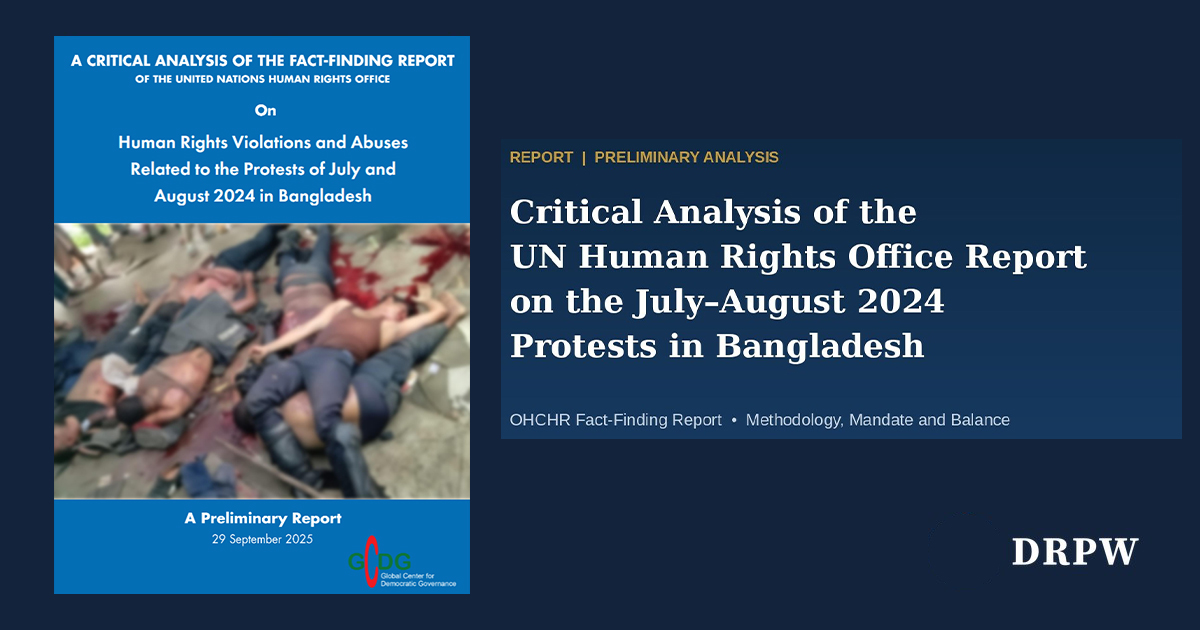
drpw-Cover of the critical analysis of the OHCHR fact-finding report on the July–August 2024 protests in Bangladesh
A preliminary report offers a critical analysis of the fact-finding report released by the UN Office of the High Commissioner for Human Rights (OHCHR) on 12 February 2025 on human rights violations and abuses linked to the July–August 2024 protests in Bangladesh. It examines the OHCHR report’s findings, strengths and shortcomings, and follows its paragraph numbering so readers can cross-reference each point.
Key figures
As stated in the report:
- 230 interviews cited by OHCHR, mostly online
- 29 victims examined out of 11,700 reported
- “As many as 1,400” deaths attributed to state forces in the OHCHR report
- 377 numbered paragraphs in the OHCHR report, which the analysis reviews point by point
What the report covers
The analysis lists the strengths it sees in the OHCHR report: institutional weight, internationalising local grievances, visibility for abuses and policy relevance. It then sets out nine critical concerns and a paragraph-by-paragraph rebuttal, including the Narsingdi jail attack, the deaths of Abu Sayed and Mir Mughdo, and the killing of police personnel.
Concerns raised
- A selective and narrow background to the protests
- Unclear interview selection criteria and a small victim sample
- Interviews with officials who were not in their posts during the protests, and no access to Army leadership
- A draft shared with the interim government before publication
- A mandate invited by the interim government rather than authorised by the Human Rights Council
- Limited attention to protester-side and non-state violence
- A timeframe that, the analysis argues, leaves out earlier developments and post-5 August violence
- Casualty figures that the analysis says are applied unevenly
- Language suggesting crimes against humanity, despite a “reasonable grounds to believe” standard
Standards and principles
The analysis argues that international human rights law, including the rights to life and non-discrimination under the ICCPR, applies equally to all victims regardless of the perpetrator. It also argues that fact-finding bodies should highlight patterns of abuse and recommend further investigation, leaving determinations of international crimes to competent judicial bodies.
Conclusion
The report concludes that the OHCHR report was not based on facts alone, but on information from victims, a few witnesses, the interim government and its political partners. It warns that the report may increase defensiveness, further shrink civic space and deepen polarisation in Bangladesh.
Read the Full Report
Read the complete GCDG publication directly below, open the report in a separate window, or download the PDF for offline reading.
Report details
- Title: A Critical Analysis of the Fact-Finding Report of the United Nations Human Rights Office on Human Rights Violations and Abuses Related to the Protests of July and August 2024 in Bangladesh
- Prepared and published by: Global Center for Democratic Governance (GCDG)
- Subject period: July–August 2024
- Published: 29 September 2025
- Status: Preliminary report
The findings, allegations and opinions in this report are those of its publisher.
About the Author